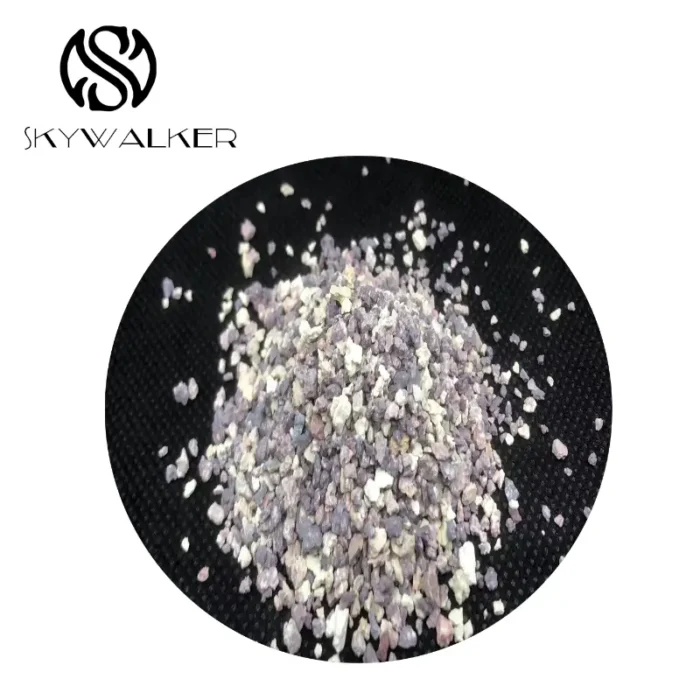
Opening
Looking at every production approach, diatomaceous earth and filtering assistant symbolize a vital factor in multiple techniques across an diverse range of markets. We’ve observed that dependable performance is based on comprehending the individual peculiarities of the material – its particle size, permeability, and filtration speed. Enhancing these criteria is essential to obtaining desired transparency and performance in the purification system. Over and above that, supervising dust quantity is a important point for occupational safety and regulatory requirements.
Discovering Suitable Filter Aid Vendor
Choosing a dependable diatomite vendor for filtering systems can significantly modify product integrity and operational results. Consider factors such as product grade, particle size, availability, pricing, and customer service when making your decision. Never neglect design skills and transport assets – a reliable merchant offers beyond simple materials. Finally, establishing a solid connection with an experienced diatomite screening firm will aid your continued achievement.
Novel Uses for Diatomite Beyond Screening
While most recognized for its role in filtration processes, diatomaceous earth possesses a surprisingly broad range of additional applications. Outside the water sector, this organic substance aids horticulture by functioning as an effective pest control and ground enhancer. Further, its distinct absorbent configuration supports livestock food by aiding digestive functions. Clients identify DE in beauty products operating as a delicate exfoliant or moisture-reducing agent. Basically, the flexibility of this material surprises skilled specialists.
- Floriculture
- Animal Ration
- Cosmetics
Supervising Excellence in Diatomite Clarifying Agent Production
Ensuring consistent quality in diatomite filter aid production requires stringent quality control procedures. Such tests open with the raw matter, spanning evaluation of grain dimension, void fraction, and water content. Throughout the milling and calcination stages, continuous monitoring for whiteness, bulk density, and flowability is critical. Finalized compound lots receive detailed evaluation based on agreed-upon procedures, regularly involving particle measurement through optical diffraction and area assessment.
- Authentication of impurity-free status is vital
- Frequent evaluations of apparatus occur
- Lineage of ingredients is preserved
International Diatomite Industry: Outlook and Suppliers
The global siliceous earth market is presently expanding remarkably sparked by surging requirement in many industries. Chief trends encompass ascending deployment in clarifying methods, farm pest prevention, and as desiccating products. Various top firms persistently fund development projects to augment material quality and extend distribution. Distinguished enterprises including EP Minerals, Imerys, Grant Prideaux exert central influence over the development of diatomite trade.
Selecting a Diatomite Filter Aid: Factors to Consider
When choosing diatomite screening aid for your system, vital points require scrutiny. The grain size variation is essential, profoundly determining filtration velocity and transparency of the refined fluid. Evaluate the separation machinery's force capability; rougher kinds favor minimal strains, while delicate selections endure greater loads. Further, the diatomite’s quality and mass density influence usage characteristics. Finally, consider expenditure and stock status of various kinds to improve screening effectiveness.
- Particulate Dimension Variety
- Filtering Apparatus Pressure Resistance
- Cleanness and Compactness
- Price and Stock Access
Green Extraction of Diatomaceous Material
Maintaining long-term viability of diatomaceous material gathering necessitates a dedicated adherence to green sourcing standards. Historically, silica mining posed ecological issues such as ecosystem disturbance and resource exhaustion. Hence, innovative vendors adopt methods reducing such effects. Such steps encompass rehabilitating disturbed areas, preserving liquid supplies, and assisting community groups. Additionally, sustainable sourcing can entail accreditations from autonomous entities, evidencing observance diatomaceous earth of harsh environmental mandates.- Focus on land rehabilitation
- Cutting resource utilization
- Assisting regional advancement
Filtration Support Powder: Improving Filtering Operations
Diatomite agent serves as a filtering enhancer, considerably boosting filtration output across broad process utilization. The processed silica produces a permeable bed above filter fabric, supporting elimination of small particulates from suspensions. Therefore, purity increases and the entire operation becomes more productive.Studying Diatomaceous Material and Processing Techniques
Diatomaceous material, recognized as light earth, is a fossilized compound made of tiny algae skeletons. Its unique structure provides exceptional absorbent qualities|Its distinctive composition delivers remarkable filtering properties|Its specialized makeup grants outstanding abrasive features|Its characteristic formation offers extraordinary absorbency traits|Its individual configuration yields superior filtering abilities|Its peculiar composition presents exceptional abrasive qualities|Its exclusive structure affords outstanding absorbent features|Its special makeup supplies remarkable filtering properties}. The manufacturing of diatomite begins with mining from open-pit mines|The production of siliceous earth starts with extraction from surface quarries|The processing of diatomaceous material initiates with excavation from open deposits|The fabrication of silica sediment originates with mining at surface pits|The creation of diatomite commences with quarrying from open-pit sites|The synthesis of siliceous material starts with surface mining|The making of diatomaceous earth begins with excavation of open deposits|The formation of silica earth starts with quarrying surface mines}. The raw material is then crushed and washed to remove impurities|The unprocessed substance is subsequently broken and cleaned to eliminate contaminants|The crude product undergoes grinding and rinsing to discard debris|The natural material is pulverized and cleaned to reject impurities|The unrefined matter is crushed and washed to clear contaminants|The original compound is ground and cleansed to eradicate debris|The raw component is broken down and rinsed to remove impurities|The crude sample is pulverized and cleaned to eliminate contaminants}. Following washing, material undergoes drying to reduce moisture content|After cleaning, substance experiences evaporation to lessen dampness level|Post rinsing, product endures heat treatment to decrease water amount|Following cleansing, compound passes drying phase to cut down moisture presence|After washing, material goes through evaporation process to lower dampness content|Post cleaning, matter undergoes heating phase to reduce water level|Following rinsing, product experiences drying step to minimize moisture amount|After purification, substance passes heat treatment to decrease water presence}. Finally, it is milled into various sizes to meet application needs|Ultimately, it is ground into different grades to satisfy diverse demands|Concluding, it is pulverized into specific ranges to fulfill usage requirements|Eventually, it is milled into assorted distributions to accommodate different uses|In the end, it is ground into multiple sizes to adapt to application specifications|Finally, it is pulverized into varied grades to meet demand characteristics|Ultimately, it is milled into distinct ranges to fit use requirements|Eventually, it is ground into assorted distributions to conform with application needs}.