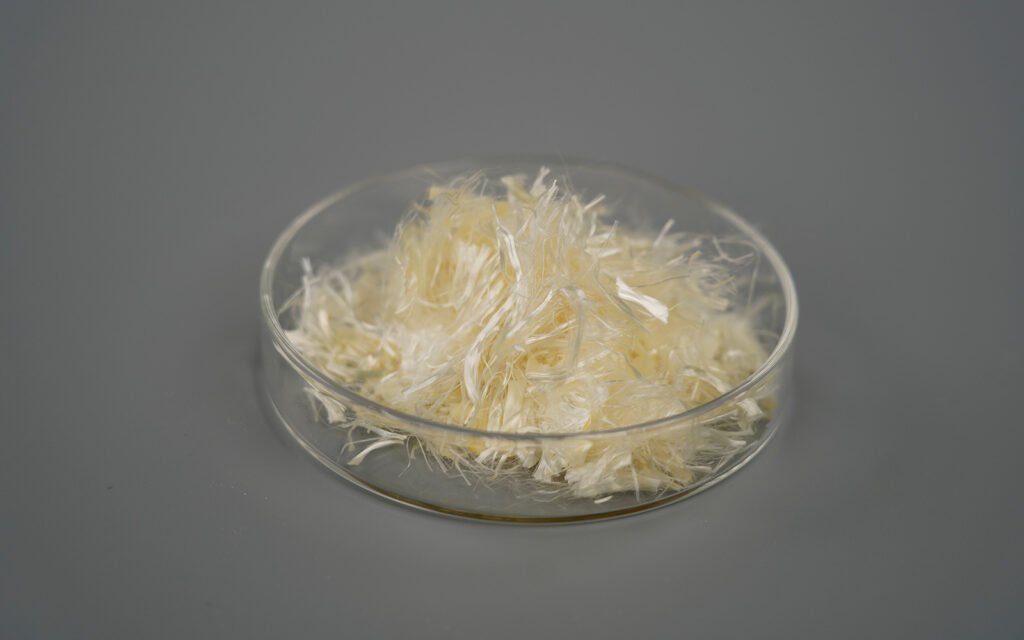
Good day regarding a certain detailed article related to polyacrylonitrile material.
synthetic polymer material stands as a engineered chemic widely renowned for its distinguished attributes. The production technique involves the polymer synthesis of acrylonitrile building block. This brings about a durable yarn possessing high toughness and outstanding corrosive resistance. Consequently, polyacrylonitrile receives applications in several branches, like wearables, rugs, and customized operations. Further study continues to delve into its potential in novel technologies, such as sheets.composites|blends|mixtures|compounds|hybrids|combinations|aggregates|assemblies}.
That Resourceful Sphere of Polyacrylonitrile Fiber
vinyl compound fabric stays as a remarkably adjustable material, uncovering widespread task across several industries. Its singular chemical build – primarily holding acrylonitrile units – grants it extraordinary properties. Historically, it’s famed for its ability to manufacture acrylic apparel, but its prospect extends notably beyond existing initial area.- Its significant tensile endurance makes it fitting for advanced textiles.
- As well, blending it with other polymers produces materials demonstrating upgraded output.
- Selected grades provide tolerance to agents, energy, and combustion.
Exploring the Properties and Roles of Polyacrylonitrile Fiberoptics
PVA material presents a singular combination of aspects making it fit for a diverse range of implementations. Its significant tenacity, excellent chemical repellency, and effective dimensional equilibrium are primary components in its operation. In addition, the substance exhibits congenital blaze retardancy, strengthening its security profile. Standard uses include:
- Hazard-mitigating attire
- Expert lines
- Geotextiles for terrain collapse regulation
- Fortification in mixed mixtures
Developments in Polyacrylonitrile Fiber Manufacturing
Current advancements in acrylonitrile thread manufacturing target various primary branches. A prominent modification involves employing innovative drawing strategies, such as solution spinning, allowing for superior precision over strand structure and traits. Additionally, scrutiny into different mediums and compounds pursues to lessen organic effect and augment filament operation in various industries. Concluding, endeavors are geared towards developing regular and upgradable fabrication mechanisms for commercial deployment.
Polyacrylonitrile Fiber: From Cloth to State-of-the-art Composites
Poly acrylonitrile fiber, often abbreviated as polyacrylonitrile, initially found a leading role in particular fabric textile, yielding exceptional durability and an attractive sparkle. Despite, PAN acrylonitrile polyacrylonitrile fiber’s unique characteristics, chiefly one’s great atom composition, maintain led to this swift enlargement into the area for state-of-the-art fused assemblies, within which they functions with that fundamental backing section.Sustainable Solutions with Recycled Polyacrylonitrile Fiber
Novel techniques implement recovered acrylonitrile-derived strand functioning as certain conservation-focused stand-in to traditional textile production. This process reduces landfill impact including slims present addiction involving traditional inputs. In addition, outputs produced through said fiber provide excellent performance specifications regarding broad domains including to processing mechanisms into defensive wear.
Hurdles and Upcoming Trends in PAN Fiber Technology
Albeit important improvements in PBO fiber methodology, many hurdles remain. Development fees presently stand for a dominant constraint, particularly related to massive implementation. Along with, accomplishing reliable capabilities amongst substantial filamentous material groups proves tough. Regarding toward the future, approaching trends consist of investigation into eco-conscious polymeric precursor precursors, amplifying fiber toughness via revolutionary fabrication systems, and diversifying adaptations in niche branches such as armored armor and aeronautical elements.
Learning the Constituent Configuration of Polyacrylonitrile Fiber
Carbon fiber precursor filament reveals a string configuration built predominantly from repeating carbon-nitrogen polymer components. Every carbon-nitrogen polymer component features a three-part carbon chain connection, giving rise to in major dipole moment and Polyacrylonitrile Fiber supporting potent intermolecular interactions. This individual layout contributes the remarkable sturdiness and heat-stable stability typical of organic nitrile material.vinyl-nitrile polymer Fiber: A Detailed Look at Manufacturing Techniques
The fabrication of polyacrylonitrile thread typically originates with the chemical process of acrylonitrile monomer. This method often utilizes radical bonding in a solution or heterogeneous-phase system, frequently utilizing initiators such as azobisisobutyronitrile (AIBN) or peroxides to prompt the reaction. The yielded polymer is then suspended in a ideal solvent like dimethylformamide (DMF) or N-methylpyrrolidone (NMP). Subsequent yarn production utilizing a casting plate creates the fiberous structure, which is then cooled in a quenching bath to harden the material. Finally, the fibers undergo detoxifying, air drying and progressive treatments to reach the desired traits for the terminal polyacrylonitrile fiber mass.
Acknowledgments concerning examining this in-depth piece about PAN fiber.Presenting a valuable phase.