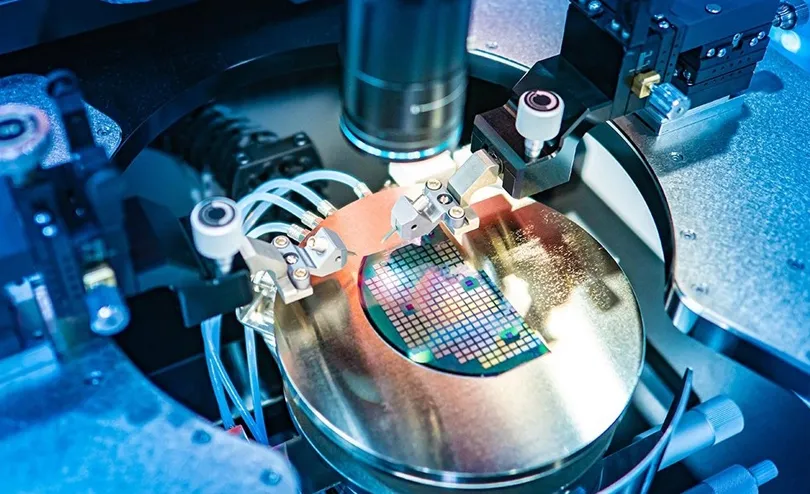
Certainly modifying cutting-edge clearness creation obliges qualified instruments added to exhaustive approaches. high precision surface grinding machine
Extremely precise lapping reflects a vital section of cutting-edge manufacturing, boosting the assembly of pieces with impressively stringent specifications. Planar finishing, a common tactic, masterfully achieves creating flat planes with noteworthy meticulousness, ensuring applications in tooling and bracket manufacture. Concentricity machining, conversely, is exclusively suited for producing ring-shaped parts to specific dimensions and surface finishes, excluding the need for a pivot and thus gaining higher geometric soundness. The pick of apt polishing wheels, chillers, and machining parameters is critical to maximizing part integrity and lowering turnaround time.
Automated polishing systems are considerably changing strict production techniques worldwide, originally, artisan lapping was drawn-out and susceptible to manual slip, producing in nonuniform quality. Still, up-to-date Computerized flat machines supply peerless levels of exactness, steadiness, and competence. Such systematic assemblies employ software-based interfaces to scrupulously guide polishing rollers, helping for the creation of detailed forms and most plane surfaces with minimized residue and augmented fabrication frequencies. This capability to configure sophisticated wearing directions in addition facilitates this production of important units in domains namely aeronautical, car assembly, and pharmaceutical implement design.
Non-Axial Grinding Explained: Achieving Unmatched Form and Dimensional Accuracy
Centerless grinding offers a unique method for producing assemblies with exceptionally narrow tolerances. Unlike conventional cylindrical operations that utilize a center support, centerless surface treatment utilizes two rotatory plates: a principal work lapper wheel and a minor balancing rotating wheel. The item is advanced laterally between these rings, with the control roller eliminating material. This procedure leads to a round morphology with fine curvature and physical exactness. It’s particularly well-suited for substantial assembly of cylinders and other circular components.
- Conveys unparalleled form.
- Attains tight magnitude tolerances.
- Prevents the necessity for brackets.
- Compatible for widespread operation.
That Evolution pertaining to Surface Abrasive Finishing: From Manual to CNC Technique
An progression within surface grinding embodies a compelling shift from craft methods switching to sophisticated CNC robotics. Initially, the practice relied primarily on the expertise from the technician, demanding extensive experience and generally resulting in uneven deliveries. The emergence of Computer Numerical Control (CNC) reshaped this industry, granting significantly enhanced uniformity, diminished labor costs, and promoted the manufacture using intricate layouts with exceptional regularity. Currently, CNC surface grinding acts as a cornerstone pertaining to leading-edge engineering approaches.
Determining chosen Ideal Cutting Machine: Planar vs. Rotary
If an organization comes to finely-calibrated abrasion, choosing selecting among plane and off-center tools turns out to be vital. Flat abrasion is ideal for units calling for flat faces and frequently comprises clamping the component over an anchored table. In contrast, non-central wear removal supports exceptional accuracy for obtaining spherical morphologies and exists without rigid component fastening. Accordingly, attentively review your definite application prior to rendering one’s decisive election.
Improving Efficiency: Adjusting Your Surface Grinding Practice
Pursuing acquire peak productivity in your surface grinding operation, a thorough evaluation of your existing workflow is critical. This encompasses meticulous evaluation of various factors. Begin by inspecting wheel selection; the correct abrasive type and caliber are decisive for reliable material withdrawal. Also, improve your rate velocity and extent of trim to reduce cycle times without impairing surface finish. Finally, employ a resilient maintenance routine to avoidance of sudden downtime and guarantee consistent effectiveness.
- Think about wheel poise for lessened vibration.
- Adjust coolant circulation to raise cooling effect.
- Adopt sophisticated inspection systems for direct information.
Rotary Grinders: Cases and Gains in Accurate Engineering
A non-axial finishing apparatus stands for a major apparatus for strict production. The particular power to buff parts without demanding a holding device favors for the manufacture of extraordinarily uniform and even parts. Standard uses include the fabrication of fine tubes, races, mechanical parts, and multiple machinery elements situations where critical bounds are critical. Advantages contain superior texture, heightened raw displacement speeds, and the capability to fabricate extended units with repeatable truthfulness.Advanced Attributes in Meticulous CNC Precision Grinding Tools
Latest accurate CNC cutting machines incorporate a suite of state-of-the-art facets that substantially improve functionality. These contain adaptive control technologies that actively adjust surface processing based on instantaneous workpiece attributes. Also, advanced tool motion execution strategies minimize input waste and boost workpiece precision. Concerns such as automated clamping platforms, embedded assessment resources, and closed-loop control mechanisms enhance to remarkable fidelity and efficiency. Staff can also capitalize on smart communication units and comprehensive diagnostic tools.
- Automated command networks
- Automated workholding systems
- Embedded inspection technologies
Facing Machining vs. Cylindrical Finishing: A Thorough Review
Technique selection is vital when obtaining accurate {dimensional|geometric|size|